
Product Overview
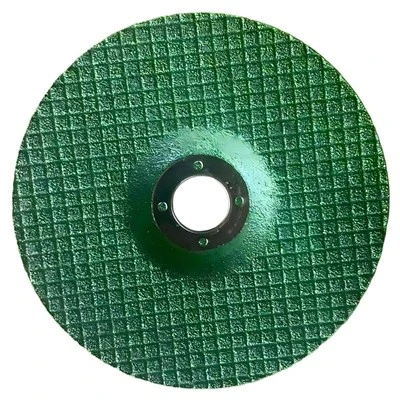
Industrial cutting wheels are resin-bonded abrasive discs engineered for high stock removal rates and structural integrity in metal fabrication and surface treatment operations. Reinforced with multi-layer high-tensile fiberglass mesh, these wheels withstand rigorous radial loads on portable angle grinders, cut-off machines, and stationary chop saws.
As a manufacturer-direct partnership, our direct-factory model fully supports bulk purchasing, custom specification reviews, and OEM private-label production. Standard packaging, branding identification, and shipping solutions are specifically tailored to meet the operational demands of industrial distributors, wholesalers, and MRO suppliers across global markets.
-
![14inch Metal Cutting Wheels]() 14inch Metal Cutting WheelsSharp, durable 14inch metal cutting wheels with strong steel ring bonding. Fast cutting, long life, OEM manufacturer from China.view more
-
![4 Inch Abrasive Cut Off Wheels]() 4 Inch Abrasive Cut Off WheelsStable qulaity of 4 inch abrasive cutting wheel for fast, safe metal cutting. Reinforced design for longer life, stable operation and OEM supply from China factory.view more


Key Features & Benefits
Multi-Layer Fiberglass Reinforcement:
High-tensile woven glass fiber nets absorb lateral mechanical stress, resisting shatter risks during manual operation within rated limits.
Contaminant-Free Formulation (INOX Grade):
Formulated with ultra-low iron, sulfur, and chlorine levels (under 0.1%), preventing post-cut surface contamination and subsequent corrosion on austenitic stainless steels.
Optimized Phenolic Bond Hardness:
Balanced matrix bonding prevents premature grain shedding while avoiding thermal glazing on high-tensile alloy steels, ensuring a stable cut rate throughout tool life.
Low Thermal Distortion:
Ultra-thin configurations (1.0 mm to 1.6 mm) minimize frictional heating, reducing burr formation, blue discoloration, and secondary grinding requirements.

Structural Steel Fabrication: Slicing carbon steel profiles, I-beams, channels, bars, and plates in heavy-duty production facilities and shipyards.
Pipe & Tube Processing: Precise cutting and root-pass preparation for steel pipes in oil, gas, and fluid transport infrastructure.
MRO & Equipment Maintenance: General workshop repair, rebar sizing, and removal of worn metal sections.
Foundry & Metalworking: Gating, riser removal, and casting cleanup using stationary cut-off machinery (subject to heavy-duty machine evaluation).
Technical Specifications Framework
|
Parameter |
Available Options / Reference Range |
Selection & Compliance Notes |
|
Outer Diameter (OD) |
100 - 400 mm (4" - 16") |
Confirm available diameter for target machine |
|
Thickness |
1.0 - 3.2 mm |
Select according to cutting load and machine rating |
|
Bore Diameter |
16 mm, 22.23 mm, 25.4 mm |
Must match machine spindle and mounting flange |
|
Abrasive Grain Type |
Aluminum Oxide (A), White Al.Ox (WA), SiC |
Verify workpiece material compatibility |
|
Grit Size |
F36, F46, F60, F80 |
Confirm grain designation for finish requirements |
|
Bond Specification |
Product-specific resin bond & hardness grade |
Check manufacturer grading system |
|
Max Operating Speed |
Product-specific (80 m/s standard, up to 100 m/s) |
Match wheel rating with machine operating RPM |
|
Wheel Type |
Type 41 (Flat) / Type 42 (Depressed Center) |
Confirm guard clearance and mounting profile |
|
Reinforcement |
Multi-layer fiberglass mesh |
Confirm structural construction per series |
Manufacturing & Quality Control
Raw Material Preparation: Abrasive grains, liquid/powder phenolic resins, and reinforcing fiberglass are dispensed and batched under strict gravimetric parameters to ensure chemical homogeneity.
Mixing & Hydraulic Forming: Multi-stage hydro-pneumatic presses apply uniform volumetric tonnage to eliminate internal voids, density gradients, and dynamic imbalances.
Controlled Thermal Curing: Molded wheels undergo programmable temperature-curved baking inside industrial tunnel kilns for 24 to 48 hours to cross-link the resin matrix and achieve full tensile strength.
Rigorous Testing Protocol:
• Rotational Burst Testing: Sampling runs undergo destructive spin-testing exceeding maximum operating speeds by safety factors of 1.5x to 2.0x in accordance with EN 12413.
• Dimensional & Runout Checks: Automated optical and mechanical gauges verify outer diameter, thickness tolerance, and lateral runout.
• Hardness & Balance Verification: Indentation hardness and dynamic balance tests ensure vibration-free high-RPM performance.
Private Labeling & Branding: Customized fiberglass label printing, embossed steel arbor ring stamping, and laser-etched traceability marks.
Packaging Solutions: Shrink-wrapped bundles in reinforced master cartons, vacuum foil moisture barriers, or bespoke distributor packaging.
MOQ & Production Framework:
• Standard production lead time: 15-20 days
• OEM customized order lead time: 25-30 days
• Proposed OEM Minimum Order Quantity (MOQ): 5,000 pieces per specification and size (Subject to final commercial confirmation)

Frequently Asked Questions
As one of the most professional cutting wheels manufacturers and suppliers in China, our products have good reputation in the market. Please feel free to wholesale high quality cutting wheels made in China here from our factory. Customized orders are welcome.