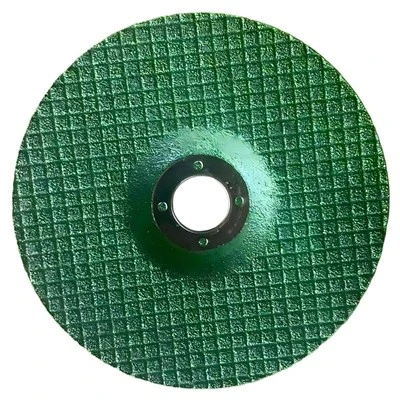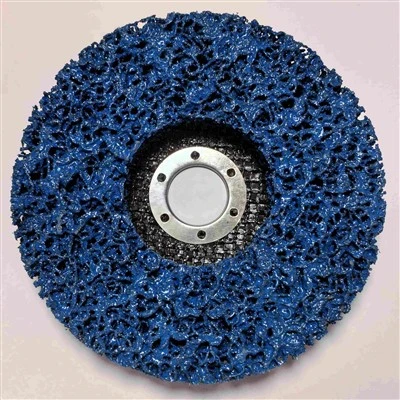

Product Overview
Abrasive Polishing Wheels are engineered for industrial surface conditioning, precision deburring, weld blending, and micro-finishing of metal components. Depending on wheel construction, abrasive type, and density grade, they support applications ranging from light decorative satin finishing to heavy-duty burr removal on complex geometries.
Non-woven abrasive wheels consist of a three-dimensional open nylon fiber web impregnated with uniformly distributed abrasive grains and cross-linked using high-strength thermosetting resins. This resilient, porous structure provides controlled flexibility upon contact with the workpiece, making these wheels ideal for finishing contoured surfaces, radii, and internal cavities where rigid abrasive tools risk gouging or altering underlying dimensions.
Standard and customized configurations match specific workpiece materials, stock removal requirements, and equipment specifications to ensure optimal wheel selection and stable operational performance.
-
![Strip Disc For Paint Removal]() Strip Disc For Paint RemovalProfessional Surface Conditioning Disc manufacturer offering OEM Strip Discs for paint removal, rust removal, and metal surface preparation. Factory direct from China.view more
-
![4 Inch Felt Wheels]() 4 Inch Felt Wheels4 inch felt wheel made of New Zealand wool, no shedding, no black marks, ideal for mirror polishing.view more
-
![Abrasive Non-Woven Polishing Wheel]() Abrasive Non-Woven Polishing WheelAbrasive polishing wheel made of non-woven nylon fiber for deburring, surface finishing and polishing. Suitable for metal, stainless steel and aluminum applications.view more
-
![Non-Woven Polishing Wheel for Metal]() Non-Woven Polishing Wheel for MetalDurable non-woven wheel for metal polishing, deburring and surface finishing of stainless steel and metal parts.view more


Key Features and Benefits
Non-Loading Open-Web Structure
The porous three-dimensional nylon matrix provides void space for swarf evacuation and promotes continuous airflow around the contact zone, minimizing heat buildup and preventing loading or workpiece burning during dry or wet operations.
Flexible Surface Contact
The elastic web construction naturally conforms to contours, fillets, and uneven surfaces, ensuring uniform abrasive action across complex geometries without edge-rounding or undercutting.
Controlled Wear Rate and Consistent Finish
Progressively eroding resin-bonded matrices continually expose fresh mineral abrasive grains, eliminating premature glazing and delivering predictable surface roughness (Ra) values throughout the tool life.
Vibration Dampening
The flexible matrix absorbs mechanical impact shock upon initial workpiece entry, reducing spindle load and protecting machine tool bearings on both manual and automated robotic cells.
Applications
|
Industry |
Specific Application |
Compatible Workpiece Materials |
|
Aerospace and Defense |
Turbine blade edge blending, structural component deburring |
Titanium Alloys, Inconel, Stainless Steel |
|
Automotive Powertrain |
Gear tooth deburring, transmission valve body conditioning |
Forged Steel, Cast Iron, Aluminum |
|
Medical Devices |
Orthopedic implant finishing, surgical tool surface preparation |
Cobalt-Chrome, 316L Stainless Steel, Titanium |
|
General Fabrication |
Weld seam blending, architectural metal satin finishing |
Carbon Steel, Aluminum, Brass |
Technical Specifications
Standard Dimension Range
• Outer Diameter (OD): 100 mm to 400 mm
• Thickness (T): 10 mm to 100 mm
• Arbor Hole (ID): 12.7 mm, 25.4 mm, 31.75 mm (Custom keyways and bushing options available)
Specification Matrix
|
Grade / Density |
Abrasive Grain Type |
Grit Size Equivalent |
Typical Application |
Max Peripheral Speed |
|
2P / Soft |
Silicon Carbide (SiC) |
F120 - F180 |
Contour blending, soft metal satin finishing |
32 m/s |
|
6P / Medium |
Aluminum Oxide (Al2O3) |
F80 - F100 |
General deburring, oxide removal |
35 m/s |
|
9P / Hard |
Ceramic / Al2O3 Blend |
F60 - F80 |
Heavy burr removal, high stock removal |
40 m/s |

Production processes operate under strict quality protocols to guarantee batch-to-batch consistency and mechanical reliability:
Fiber Web Formation and Resin Dosing: High-tensile nylon filaments are carded into uniform web formations, precision-dosed with thermosetting synthetic resins, and coated with graded mineral abrasives.
Thermal Hydraulic Curing: Layered webs undergo controlled thermal pressing in high-precision hydraulic curing ovens to ensure uniform cross-linking and density distribution across the entire wheel width.
CNC Core Machining and Dynamic Balancing: Wheels are core-bored to exact tolerance limits and dynamically balanced (for outer diameters exceeding 200 mm) to eliminate runout and vibration during high-speed operation.
Destructive and Non-Destructive Testing:
Burst Speed Testing: Lot sampling includes spin-rig testing at 1.5x maximum operating speed to verify structural integrity.
Density Verification: Durometer and gravimetric checks confirm uniform matrix hardness before packaging.
OEM and Customization
Collaborations directly support industrial distributors, machine builders, and manufacturing enterprises with engineered abrasive solutions tailored to specific production cells:
Dimensional Customization: Non-standard outer diameters, custom arbor hole configurations, integrated metallic core bushings, or specialized thickness tolerances.
Formulation Customization: Tailored resin hardness ratios (from soft 2P to dense 9P) and specialized abrasive mineral blending for difficult-to-machine alloys.
Private Labeling and Packaging: Custom laser etching on core flanges, barcode labeling, bulk industrial boxing, and customized compliance paperwork for distributors.
Application Testing Support: Engineering sample lots provided for trial runs and cycle-time validation under your plant operating parameters.
Information Required for a Custom Quotation:
• Required outer diameter, thickness, and arbor hole dimensions.
• Workpiece material and component geometry.
• Current surface condition and type of burr or weld seam to be processed.
• Target surface finish (Ra) and material removal requirements.
• Machine type, mounting setup, and spindle operating speed.
• Operating environment (wet with coolant vs. dry).
• Estimated order quantity and packaging preferences.
Frequently Asked Questions
As one of the most professional abrasive polishing wheel manufacturers and suppliers in China, our products have good reputation in the market. Please feel free to wholesale high quality abrasive polishing wheel made in China here from our factory. Customized orders are welcome.